The Scarf Knot Is a Shape, Not Just a Finish
See how scarf knot size, placement, and fabric drape alter an outfit’s visual weight, then choose a tie that suits your neckline, layers, and proportions.
A soft wool scarf can make a plain coat feel considered, but a bulky knot tucked under the chin may crowd the same coat’s open neckline. The scarf knot is not merely a way to keep fabric in place: its size and position create a visible shape that shifts the balance of an outfit.
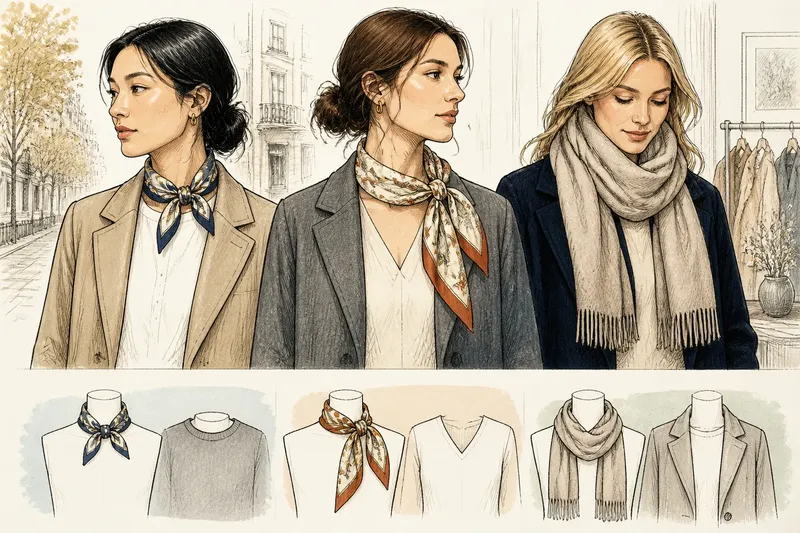
That shape changes with the scarf itself. A fine silk square folds into compact lines; a long, loosely woven scarf spreads into a larger, softer mass. Rather than chasing one universally flattering tie, consider three approaches—compact, centered knots, off-center knots, and loose draped ties—and choose according to the neckline, fabric, and visual weight you want.
A scarf knot changes the outfit’s visual weight
Visual weight is the amount of attention a shape attracts. A thick loop near the face usually draws the eye upward, while long ends hanging down create a vertical line that can connect the face to the rest of the outfit. Neither effect is automatically better; the useful question is whether the scarf’s shape supports or competes with the clothes around it.
Think of the knot as a small cushion placed on a shelf: its apparent size depends partly on what surrounds it. Against a broad lapel or a chunky sweater, a substantial tie may look integrated. Against a narrow collar, fine knit, or small neckline, the same tie can look like a separate object.
Start by noticing the opening at the neck. A high crew neck leaves little space for a large knot, while an open coat or V-neck provides room for fabric to sit without crowding the face. The scarf’s ends matter too: short ends make a compact, concentrated shape; long ends can draw the eye down the torso.
Compact knots suit close necklines and fine fabric
A small knot keeps the scarf contained near the neck. It often suits lightweight silk, cotton voile, or a fine wool scarf, especially with a button-down shirt, a slim coat collar, or a neat crew neck. The restrained shape lets the garment’s neckline remain visible rather than covering it with layers of fabric.
For a square scarf, fold it into a band and tie a modest knot at the front or just to one side. With a long, narrow scarf, a simple loop can create a similar effect without adding much bulk. Keep the ends short or tucked if you want the knot itself, rather than two long tails, to be the main detail.
This approach can also help when the outfit already has strong features near the face, such as a high collar, a patterned blouse, or a prominent pair of earrings. The scarf still adds color and texture, but its shape does not compete as strongly for attention. If a compact knot feels pinched, loosen the fold rather than pulling it tighter.
Off-center knots add movement without a large bundle
An off-center tie shifts the scarf’s visual weight toward one side of the neckline. That small change can make a simple top feel less formal and can give a scarf a more deliberate presence without building a thick knot directly beneath the chin. It tends to work well with a smooth blouse, a simple coat opening, or an outfit whose front already has a clear vertical line.
With a long scarf, place the knot near one shoulder and let the ends fall at different lengths. With a square scarf, a side knot can show the folded edge and make the fabric’s pattern more visible. The effect depends on how much fabric gathers: thin silk makes a discreet accent, while a soft, wider scarf creates a more noticeable asymmetry.
Asymmetry can draw attention toward one side of the face or chest, so check the whole outfit rather than judging the knot in isolation. If one end falls over a lapel and the other hangs free, the contrast can look intentional; if both ends bunch in the same spot, the tie may read as accidental. A quick adjustment of the knot’s position can change the balance more than retightening it.
Loose draping gives substantial scarves room to fall
A loose drape lets the scarf’s length and texture do the work. Instead of tying a large knot, lay the scarf around the neck and allow the ends to fall, or loop it once with enough ease for the fabric to spread. This approach suits soft cashmere, brushed wool, and other fabrics that look appealing when they fold naturally.
It is especially useful with open coats, relaxed jackets, and broad lapels, where the scarf can sit within the garment’s existing shape. A thick scarf may look more balanced when it spreads across the chest than when it is compressed into a dense knot at the throat. On the other hand, a loose drape can obscure a delicate collar or compete with a detailed neckline, so consider what you want to keep visible.
Length changes the result. Ends that reach toward the waist create a long line; ends that stop near the chest concentrate attention higher up. If the scarf is wide as well as long, a single loose fold may provide enough coverage without making a bulky loop. Let the fabric settle, then look for bunching that hides the coat opening or pulls the eye away from the outfit’s intended focal point.
Which scarf knot works with your neckline?
What knot works with a crew-neck sweater?
A compact tie or a simple loose loop usually leaves the sweater’s neckline readable. With a thick sweater, keep the scarf’s gathered section modest so the knit and scarf do not form one oversized bundle beneath the face.
How should you tie a scarf with a V-neck?
A small front knot can sit within the opening, while an off-center tie can preserve more of the V shape. If you prefer a drape, keep the ends outside the neckline so they do not cover the line you want the outfit to show.
Can a thick scarf have a neat knot?
Yes, but a loose wrap or drape often looks less crowded than a tight, multi-layered tie. If the fabric is too bulky to gather comfortably, let it spread over the coat rather than forcing a small knot.
Where should long scarf ends fall?
Choose a stopping point that works with the coat and the line of the outfit: ends near the chest keep attention higher, while longer ends create a more vertical effect. Check that they do not obscure a detail you want seen, such as a lapel, belt, or shirt front.
Choose the tie by matching fabric, neckline, and intent
A practical choice starts with three observations: how much space the neckline offers, how much bulk the fabric creates, and where you want the eye to go. A close collar and fine scarf tend to favor a compact tie. An open neckline can accommodate an off-center knot or a drape, while a bulky scarf often looks better with room to spread.
Imagine you are wearing a smooth navy coat with a narrow collar and a light printed silk scarf. A small side knot could add a point of interest without covering the collar; a thick loop would change the outfit’s scale and hide more of the coat. Now imagine the same coat with a soft, wide wool scarf: a relaxed drape could sit across the lapels, while a tight knot might bunch up near the neck.
These are not rigid pairings. A deliberately oversized knot can be the outfit’s focal point, and a long drape can feel unbalanced if its ends cover too much of a simple top. The aim is to choose knowingly: decide whether the scarf should be a quiet accent, a directional detail, or the largest shape near the face.
Make a quick adjustment before you leave
After tying the scarf, check it with the coat or jacket you plan to wear, not just with the outfit underneath. Outerwear changes the available space around the neck, and a tie that looks balanced indoors may be squeezed by a raised collar or hidden beneath a lapel.
Look at the scarf from the front and the side. If the knot crowds your chin, loosen it or move it lower; if it disappears into the coat, shift it outward or let more fabric show. When one end seems heavier than the other, change the knot’s position before adding another wrap.
For scarf knot styling, the most helpful final check is simple: does the tie suit the fabric, leave the neckline as open or covered as you intend, and direct attention where you want it? When those choices agree, even an uncomplicated loop looks considered. A scarf does not need an elaborate knot to belong in an outfit; it needs a shape that makes sense beside the clothes it touches.