How a Jacket Shoulder Seam Shapes the Shoulder Line
A jacket shoulder seam can change the whole upper outline. Learn what to check in the seam, sleeve and movement before choosing a cut or alteration.
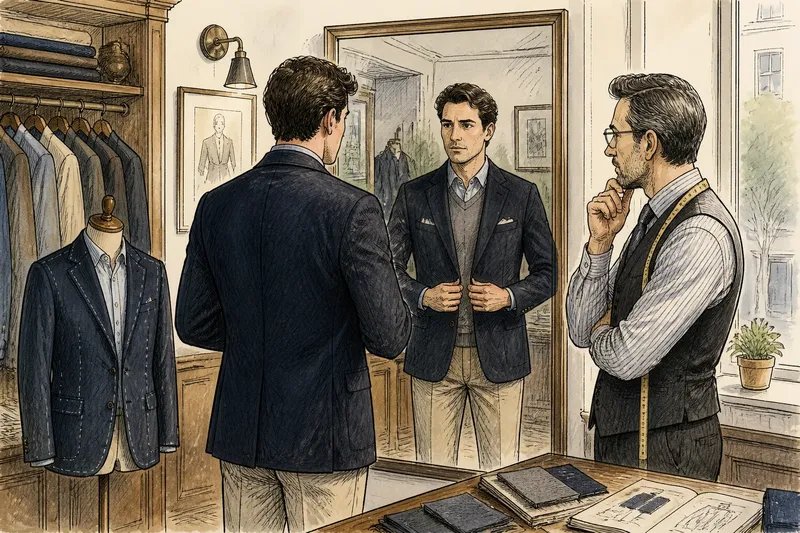
You put on a jacket, glance in the mirror, and notice one shoulder seems wider or more sloped than the other. The jacket shoulder seam may be shaping that impression, along with the sleeve setting and the fabric’s structure.
Before deciding the jacket is simply the wrong size, look at the shoulder line from the front and side. Similar-looking fit problems can call for different solutions, from trying another cut to asking a tailor for an assessment.
When the shoulder seam sits beyond the shoulder
If the seam falls past the point where your shoulder turns into your upper arm, the jacket may have a dropped or oversized shoulder. That can be an intentional design choice, but it may also make the upper body appear broader, soften the shoulder edge, or leave the sleeve hanging away from the arm.
Stand with your arms relaxed. If the extra width forms a smooth, deliberate line and the sleeve hangs cleanly, the cut may be working as intended. If the fabric collapses into folds or the sleeve twists, try a narrower shoulder cut or another size, then check that the chest and fastening still feel comfortable.
Shoulder alterations are less straightforward than taking in a side seam because the sleeve is attached at this point. If you like the jacket everywhere else, ask a tailor whether its shoulder can be reshaped before buying it; some styles are poor candidates for that work.
When the seam pulls inward or cuts across the shoulder
A seam that sits too far toward the neck can make the jacket look pinched, while tension lines radiating from the shoulder or upper chest can suggest that the garment is too narrow. The sleeve may also pull toward the back when you reach forward, even if the jacket looks tidy while you stand still.
Fasten the jacket and move your arms naturally. If the seam shifts, the fabric strains, or the collar lifts away from your neck, the issue may involve the jacket’s width or balance rather than the seam alone. Try a roomier cut; if you size up, check that the shoulders do not extend too far.
Do not judge a tight shoulder only by the label or by how the jacket looks unfastened. Notice whether the fabric lies without strain during the movements you actually make.
When one sleeve head looks raised or lumpy
The sleeve head is the rounded top of the sleeve where it joins the jacket. It can form a crisp edge or a soft curve; if it bumps, puckers, or seems to stand away from the shoulder, the sleeve setting may not suit the jacket’s shape, or the fabric may hold more structure than you prefer.
Look at the sleeve from the front and side, then compare both shoulders. Some shaping can be part of a tailored design, but uneven puckering or a twisted sleeve may distract from the overall line. Try the jacket over the kind of shirt or sweater you expect to wear with it, since a thicker layer can change how the sleeve hangs.
Imagine you are choosing between two navy blazers to wear with a light shirt and a fine-knit sweater. One has a pronounced sleeve-head ridge that remains visible over both layers; the other has a smoother join. If you want a quiet shoulder outline, the smoother option is the more promising starting point, provided it remains comfortable when you move.
When the shoulder line looks too sharp or too soft
Shoulder pads, canvas, lining, and fabric weight all affect how firmly a jacket holds its outline. A padded shoulder can create a straighter, more defined edge, while an unstructured jacket tends to follow the body’s natural slope. Neither is automatically better; consider whether the shape looks intentional on you.
If a jacket feels overly sharp, try a softer construction or a fabric that drapes rather than standing away from the body. If the shoulder seems to collapse, a more structured style may provide the clean line you want. Think of the shoulder like the frame of a picture: its shape sets the boundary, while the surface and finish affect the impression.
Inspect the whole upper silhouette, not just the pad. A firm shoulder can look balanced when the lapels and sleeves share its formality, while the same shoulder may feel disconnected on a very soft, casual jacket.
Which shoulder details should you check before deciding?
- Check where the shoulder seam meets your body. If it falls near the outer shoulder and the sleeve hangs cleanly, keep assessing the jacket; if it drops far down your arm or crowds your neck, try another cut.
- Check the sleeve from the front and side. If it hangs smoothly, proceed to a movement check; if it twists or forms distracting folds, compare another jacket or ask a tailor about the sleeve setting.
- Check the fabric for strain with the jacket fastened. If it lies comfortably, keep considering the fit; if tension lines appear or the collar lifts, try a roomier cut and reassess the shoulder.
- Check the jacket with your usual shirt or sweater. If the shoulder remains comfortable and the sleeve keeps its shape, judge it with that layer; if the sleeve binds or bulges, try a different size or cut.
- Check whether the sleeve-head ridge is even on both sides. If both sides look similarly shaped, decide whether that structure suits your style; if one side puckers or stands away, compare another garment or ask a tailor to inspect it.
- Check how the jacket moves when you reach forward. If the seam and collar stay settled, continue considering it; if the sleeve pulls back or the collar lifts, try a roomier shoulder or a different cut.
- Check whether the shoulder construction suits the rest of the jacket. If the pads, lapels, and sleeves share a coherent level of structure, consider the whole silhouette; if the shoulder looks disconnected, try a softer or more structured alternative.
Where should a jacket shoulder seam end?
On a conventional set-in sleeve, the seam usually meets the outer edge of your natural shoulder rather than falling far down the arm or crowding the neck. Design cuts vary, so judge the full line and sleeve hang instead of treating that point as a rigid rule.
Can a tailor fix a jacket shoulder that is too wide?
Sometimes, but reshaping a shoulder can involve removing and resetting the sleeve, and the result depends on the jacket’s construction and available fabric. Ask a tailor to assess the specific garment before relying on an alteration.
Why does a jacket shoulder look different over a sweater?
A thicker layer can fill the sleeve and chest, changing how the fabric settles at the armhole. Try the jacket with your usual layers and check that the shoulder stays comfortable without creating new folds.
Should shoulder pads be removed?
Removing or changing pads can alter the sleeve head and the jacket’s balance, not just soften the edge. Consider a change only after seeing how the jacket looks and moves in its current form; a tailor can explain what its construction allows.
Choose a shoulder line that suits the jacket’s job
Imagine you are comparing two jackets for work, using these invented observations: one has a shoulder seam close to the outer shoulder, sleeves that hang smoothly, and no strain when fastened; the other has seams that fall down the arms and sleeves that twist when you reach forward. First, try both with the shirt you expect to wear. Next, fasten each and reach forward, then compare their sleeves and collars from the front and side. The first remains settled while the second pulls and twists, so the first is the more promising choice for that use, assuming both feel comfortable; if its shoulder line does not suit your preferred silhouette, keep looking rather than choosing by seam position alone.
When comparing jackets, notice the seam, sleeve head, and structure together. A well-placed seam cannot compensate for a sleeve that twists, and a soft shoulder may be exactly right when the rest of the garment is designed to drape.
Use the jacket shoulder seam as a clue, not a verdict. Wear the jacket as you intend to use it, let your arms rest naturally, and check the line from more than one angle; comfort and movement help you decide whether its outline works for you.