Dressing for a Day That Moves from Desk to Dinner
Dressing for a day that moves from desk to dinner is easier with a comfortable base, a useful layer, and one evening change suited to your plans.
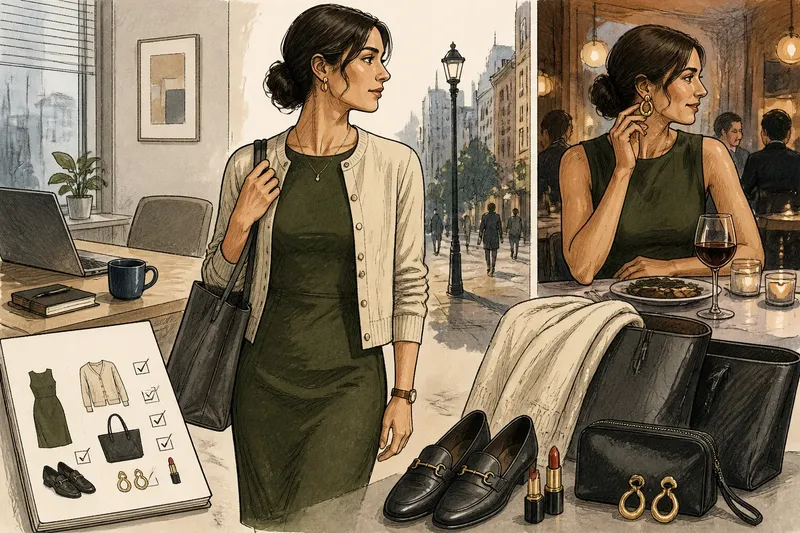
At 5:30, your laptop is still open, dinner is across town, and the cardigan you wore through a chilly meeting is starting to feel like part of your desk. Dressing for a day that moves from desk to dinner is simpler when your outfit works in both places and one small change is ready for later.
Start with the evening’s actual setting
A quiet restaurant, a crowded bar, and a friend’s living room call for different levels of polish, warmth, and freedom to move. Think about what you will do after work, not just the name of the venue.
Include the route in your decision. Shoes that feel fine in the office may be uncomfortable on a long walk, and a stiff waistband can become distracting during a leisurely meal. Your outfit should suit the day you have, rather than an imagined formal occasion.
Keep workplace expectations in view. A sleeveless top may feel right at dinner but not for a client meeting, while a structured blazer can look too formal in a casual restaurant. A base that fits both settings gives you less to fix later.
Choose a base that feels finished without a layer
Build around a dress, a coordinated top and trouser combination, or another outfit that looks intentional on its own. Offices can be warm, and a jacket may come off at dinner, so the base needs to hold up without it.
A matte knit dress, a fluid blouse with straight-leg trousers, or a fine-gauge sweater with a skirt can each work, depending on your workplace and personal style. Check the neckline, sleeves, and overall shape without the outer layer; a good base should not depend on the jacket to look complete.
Color can make a simple outfit feel considered without adding clutter. A deep green dress, for example, can work with a restrained work layer and a brighter evening earring. Treat the outfit like a well-packed lunchbox: the main pieces need to fit together before you add anything extra.
Give the daytime layer a clear job
Bring a layer for a real need, such as office air conditioning, a chilly commute, or a meeting where you prefer more coverage. A fine cardigan, unlined blazer, or neat overshirt may be easier to carry than a bulky piece that changes the whole silhouette.
Consider how the outfit looks once the layer is off. Are the sleeves comfortable on their own? Does the neckline still feel finished? Will the layer fold into your tote without crowding it? Those questions help distinguish a useful extra from a piece the outfit cannot do without.
Say you have a presentation in a cool conference room and a relaxed dinner afterward. Your starting pieces are a sleeveless knit dress and a light cardigan; you wear both for the meeting, then remove the cardigan if the restaurant is warm. The visible result is a covered work outfit that still looks complete at dinner, with no need to change the base.
Make one purposeful evening change
Choose one or two details that shift the mood without turning the transition into a costume change. Earrings, a lipstick, a slim belt, a different shoe, or a compact bag can be enough.
Match the detail to the dinner and the rest of your outfit. A sculptural earring can add interest to a simple neckline, while a polished flat may be a better fit than a heel if you will walk or stand. If your work clothes already include a bold print, a quieter accessory can keep the look balanced.
Put the chosen item somewhere easy to reach, such as a small pouch in your work bag or a desk drawer. Deciding before the workday starts means you will not have to search through a crowded bag as colleagues head out.
Let shoes and bags suit the route
Shoes affect both comfort and formality. A clean loafer, polished flat, or low boot can work across settings; if you prefer a dressier evening pair, bring it only if carrying it is practical and your plans call for the change.
Your bag needs to hold what you actually use without taking over dinner. A structured tote may be helpful at work but cumbersome at a restaurant. If you want a smaller evening bag, choose one that packs flat inside the tote and transfer only the essentials.
Pay attention to movement as you get dressed. Walk, sit, and reach for a mug. If a strap slips, a skirt twists, or a shoe catches on a hem, adjust the outfit before the commute rather than after you arrive.
Reset in an order that keeps things simple
Start with comfort and neatness. In the restroom, smooth your clothing, check that nothing is caught or creased awkwardly, and freshen up in a way that suits your routine.
Next, decide whether to remove or keep your layer based on the room and the evening temperature. Then make the change you planned, such as adding earrings, switching bags, or applying lipstick. If you brought different shoes, check the route and weather before changing.
A small pouch might hold a comb, tissues, and your chosen accessory. Keep it limited to items you are comfortable carrying and likely to use, so the transition stays quick rather than becoming another task.
What should you settle before leaving home?
How formal is the dinner?
Use the venue and the people you will meet as clues, then choose a level of polish that feels natural. If the plan is uncertain, a tidy base and one changeable accessory give you room to adjust.
Which layer should you bring?
Choose for a known condition, such as a cool office or a cold walk between transit and the restaurant. A layer that works over your base and is easy to carry is more useful than one chosen only to complete the outfit indoors.
Can I wear the same shoes all day?
Yes, if they suit your workplace, route, and dinner setting. A comfortable shoe that looks deliberate may be preferable to carrying a second pair through the day.
What if the evening plan changes?
Keep the base neat and avoid making the outfit depend on one particular venue. A removable layer and a small accessory you can leave in your bag offer flexibility without requiring a second outfit.
Check the pieces you will actually wear
Before leaving, compare the base, layer, shoes, bag, and evening detail as a set. Use these checks to make a decision while you can still change something:
- Observe whether the base looks finished without the jacket; if the neckline or sleeves feel incomplete, choose another base or add a suitable underlayer.
- Observe whether the layer suits both the workplace and the evening; if it looks too formal for dinner, bring a softer cardigan or plan to leave it off.
- Observe whether your shoes suit the walk and the venue; if they pinch or feel too casual for the dinner, choose a comfortable alternative or pack a second pair only if carrying it is practical.
- Observe whether the work tote can hold your essentials and the evening item; if it cannot, remove nonessential contents or use a compact bag that fits inside it.
- Observe whether the evening accessory competes with a print or statement neckline; if it does, swap it for a simpler detail.
- Observe whether a skirt, sleeve, or bag strap shifts as you sit and move; if it does, adjust the fit or choose a piece that stays in place.
Dressing for a day that moves from desk to dinner comes down to a base that stands on its own, a layer with a clear purpose, and one detail chosen for the destination. Leave room for the plan to change, and your evening transition can be as simple as closing the laptop and taking off your cardigan.