One Outfit, Two Colour Anchors
One outfit, two colour anchors: choose a dominant shade for a cohesive impression or a small accent to direct attention without rebuilding your closet.
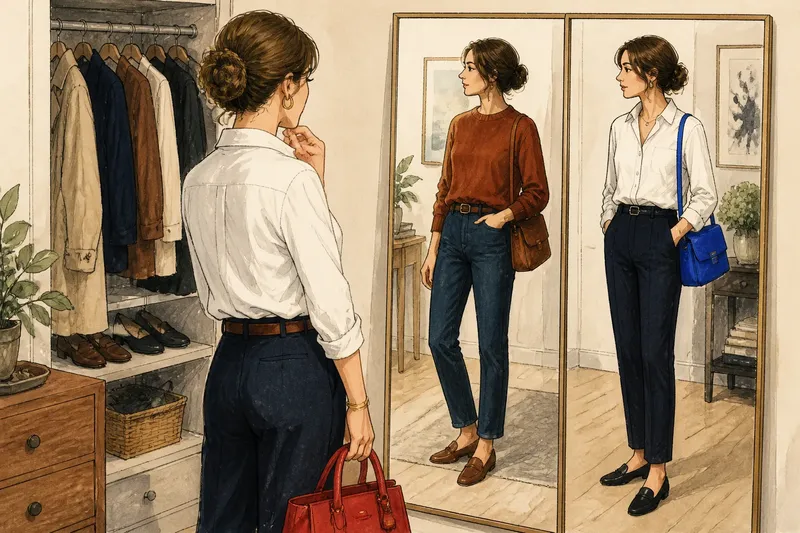
You pull on navy trousers, a white shirt, and brown loafers, then pause at the closet door with a red bag in hand. That small choice changes what the outfit asks the eye to notice. With one colour anchor, you can let a dominant shade shape the whole impression or use a modest accent to point attention toward one detail.
These approaches serve different purposes. A dominant colour creates a broad, steady visual field; a small accent adds a distinct note against quieter clothing. Choose based on the impression you want, the pieces already in the outfit, and how much attention you want colour to draw.
Choose a dominant colour when you want the outfit to feel connected
A dominant colour is the shade that occupies the most visible area or appears across several pieces. It might be a green dress, a brown jacket over a brown skirt, or a set of navy separates. Supporting colours can still appear, but the dominant shade gives the outfit its main visual identity.
This approach suits days when you want a composed look without deciding which accessory should stand out. Repeating a colour across clothing can make distinct pieces feel related, like a common thread tying together objects in a drawer. The result can be quiet or bold depending on the shade, its depth, and how much of it you wear.
Start with the garment you most want to wear, then ask whether it can lead. If a rust-colored sweater already draws the eye, supporting it with dark denim and warm brown shoes keeps the sweater in charge. A second strong shade may still work, but it creates a conversation between colours rather than organizing the look around one.
Dominance does not require exact matches. A plum coat with a lighter mauve top can keep a related family in view while allowing variation in texture and depth. The shades can still read as an overall theme rather than identical pieces.
Use a small accent when one detail should lead
An accent colour occupies a limited area: perhaps a red bag, a bright belt, a turquoise earring, or a patterned tie with a clear note of yellow. The rest of the outfit gives it room to register. An accent works well when your clothes already feel settled and you want a point of interest rather than a look built around colour.
Placement matters as much as shade. A bag sits near the hand and hip; earrings draw attention toward the face; shoes put colour near the ground. Choose the location according to what you want noticed, not simply the accessory that is easiest to add.
Say you have charcoal trousers, an ivory shirt, and black flats, and want the outfit to feel less plain for a casual lunch. Add a cobalt bag, and the expected result is one clear focal point while the neutral pieces remain the larger story. A cobalt cardigan would cover more area, shifting the colour toward a dominant role instead.
One accent is often enough for a clear focal point. Repeating its colour in a second, very small detail can connect the outfit, but several vivid accessories may compete. Think of the repeat as an echo, not a second announcement.
Match the colour anchor to the situation
For a formal setting or a meeting where you want a restrained impression, a dominant neutral or deep shade can create a continuous look without requiring every piece to match. Navy, charcoal, cream, and brown can all serve as anchors, depending on the clothes and setting. A small accent can add a personal note while staying secondary.
For a social occasion where you want the outfit to feel lively, a saturated colour across a larger area can carry that energy. If that feels like more attention than you want, keep the clothing subdued and choose one vivid accessory. The choice is not between personality and restraint; it is about deciding where the personality should appear.
For a closet built around basics, begin with the anchor your existing pieces support. Several dark separates can make a dark dominant look straightforward, while mostly neutral clothes can make accent accessories easy to rotate. You do not need a matching set of garments to make either approach work.
With a patterned garment, look at its colours before adding another anchor. A floral blouse with a green background might lead the outfit, with solid trousers supporting it. Or a small colour from the print can reappear in a bag or shoe as an accent, especially if the rest of the outfit stays calm.
How do you decide which colour anchor fits?
What is the difference between a dominant colour and an accent?
A dominant colour takes up more visual space or repeats across substantial pieces, shaping the outfit’s overall impression. An accent appears in a smaller area and directs attention toward a particular detail.
Can an outfit have more than one dominant colour?
Yes, but the colours share attention rather than leaving one in charge. That can feel balanced when the pieces have similar visual weight, while a clear lead colour usually makes the outfit easier to read at a glance.
How can you keep a bright accent from feeling disconnected?
Let the other pieces share a quality with it, such as a warm or cool cast, or repeat a small hint of the accent elsewhere. If it still looks unrelated, try a less vivid shade or remove competing details.
Does a dominant colour have to be bright?
No. A muted shade can dominate through its area and repetition, while a bright colour on one small item can remain an accent. Dominance describes the colour’s role in the outfit, not how intense the shade is.
Check the colour anchor before you leave
Stand back from a mirror or look at a full-length reflection in a shop window. Notice what your eye sees first, then ask whether that matches your intention. If the bag catches your attention but you wanted the sweater to lead, try a quieter bag or add another substantial piece in the sweater’s colour.
Check the outfit in the light where you will wear it if you can. A shade that looks soft indoors may appear more vivid outside, and a patterned item can reveal colours that were hard to distinguish in a dim room. You do not need to correct every surprise; decide whether the emphasis still feels right.
Pay attention to contrast as well as colour family. A bright accessory against a dark outfit will usually stand apart more than a muted accessory among similar neutrals. For a gentler accent, choose a shade related to the surrounding colours; for a clearer focal point, allow a stronger difference.
When the choice still feels uncertain, remove one coloured item and look again. That edit helps you decide whether the outfit needs a stronger anchor or whether its existing pieces already make a complete visual story. The aim is not to obey a rule but to make the colour emphasis feel intentional.
Let the anchor do one clear job
Before getting dressed, name the job you want colour to do: connect several pieces, give a neutral outfit a focal point, or bring a printed garment into focus. Choose a dominant shade if colour should shape the whole look, or a small accent if attention should land in one place.
For one outfit, two colour anchors can create different moods without requiring a new wardrobe. Keep the clothes and change the bag, or keep the accessory and let a coloured jacket take the lead. The useful test is whether the emphasis you see in the mirror is the emphasis you meant to create.